
The Paradesi Synagogue: 450 Years of Spice, Prayer, and Hand-Painted Tiles in Mattancherry
Chinese tiles, Ethiopian rugs, a Malayalam clock tower. What if I told you that Kochi's oldest synagogue is a world in one room?
Chinese tiles, Ethiopian rugs, a Malayalam clock tower. What if I told you that Kochi's oldest synagogue is a world in one room?

Three colonial powers. One wooden church turned stone. And a tombstone that tells 500 years of Fort Kochi's story.

Planning your Fort Kochi visit? Scroll to your date for a ready-made itinerary — morning cafes, heritage walks, afternoon rest spots, sunset times, and night plans.
Chinese tiles, Ethiopian rugs, a Malayalam clock tower. What if I told you that Kochi's oldest synagogue is a world in one room?

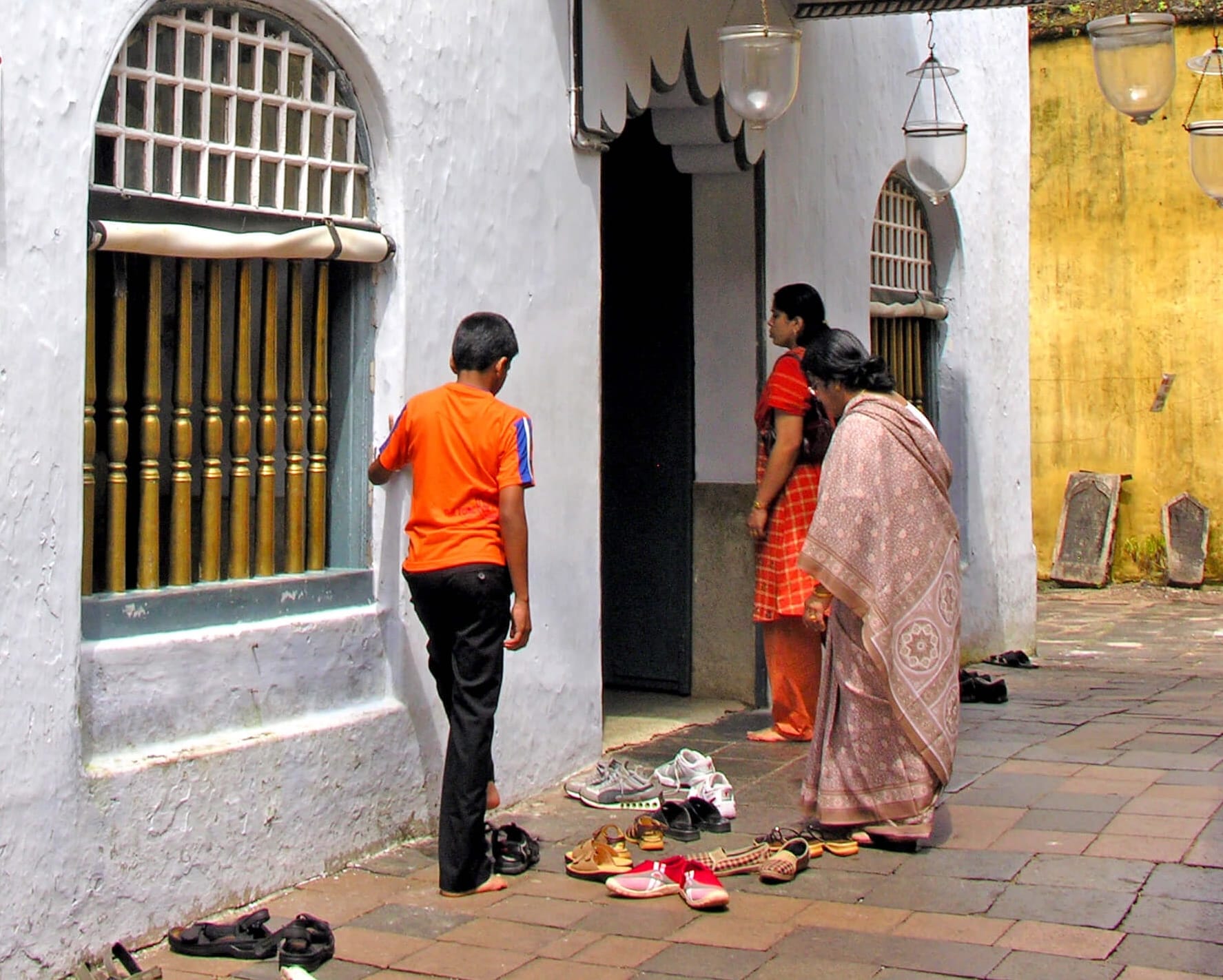
You take off your shoes at the door. This is the rule. Not because it's a synagogue rule, but because it's a Kerala rule. Hindu temples, mosques, churches, and this 450-year-old Jewish prayer hall all ask the same thing: leave your footwear outside.
That small detail tells you more about the Paradesi Synagogue than any plaque on the wall. This building belongs to My Beloved Fort Kochi.
In 1568, three men - Samuel Castiel, David Belila, and Joseph Levi - built the Paradesi Synagogue on land given to the Jewish community by Raja Rama Varma of Kochi. The land was right next to the Mattancherry Palace to symbolise the King's genuine care and love for the Jewish community. Did you notice that the palace's Hindu temple and the synagogue share a wall to this day?
The word "Paradesi" means "foreigner" in Malayalam. It stuck because the synagogue was built by Sephardic Jews - families who had been pushed out of Spain and Portugal during the Inquisition. Some came through Aleppo and Safed. Others arrived via the Netherlands. They spoke Ladino, learned Judeo-Malayalam, and traded spices with the world.
But they were not the first Jews in Kerala. Not by a long stretch.
The Jewish connection to Kerala goes back to at least the 4th century, when the first synagogue in India was built in Kodungallur (then called Cranganore). These were the Malabari Jews, also called Yehudan Mappila. They were traders on the Malabar coast, and they controlled a large share of the global spice trade.
Around 1000 CE, the Hindu ruler of the Malabar Coast gave Joseph Rabban, a Jewish leader, copper plates granting him special privileges and political autonomy. Those copper plates still exist. They are inside the Paradesi Synagogue today, inscribed in Old Malayalam.
When a flood destroyed Cranganore's port in 1341, many Jews moved south to Cochin. They built a synagogue there in 1344. Centuries later, Portuguese raids destroyed it. The Raja of Kochi stepped in, offered protection and land, and the present synagogue was built.
Seven synagogues once stood in this area. The Paradesi is the only one still holding prayers.
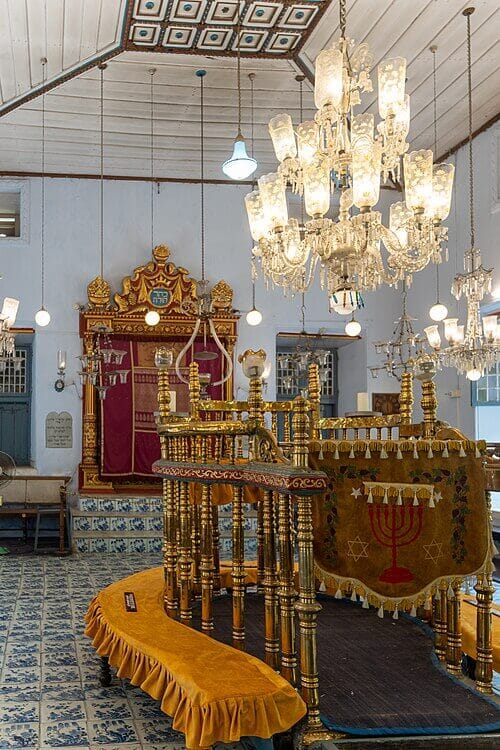
The synagogue is small. One main hall. But every surface carries history from a different continent.
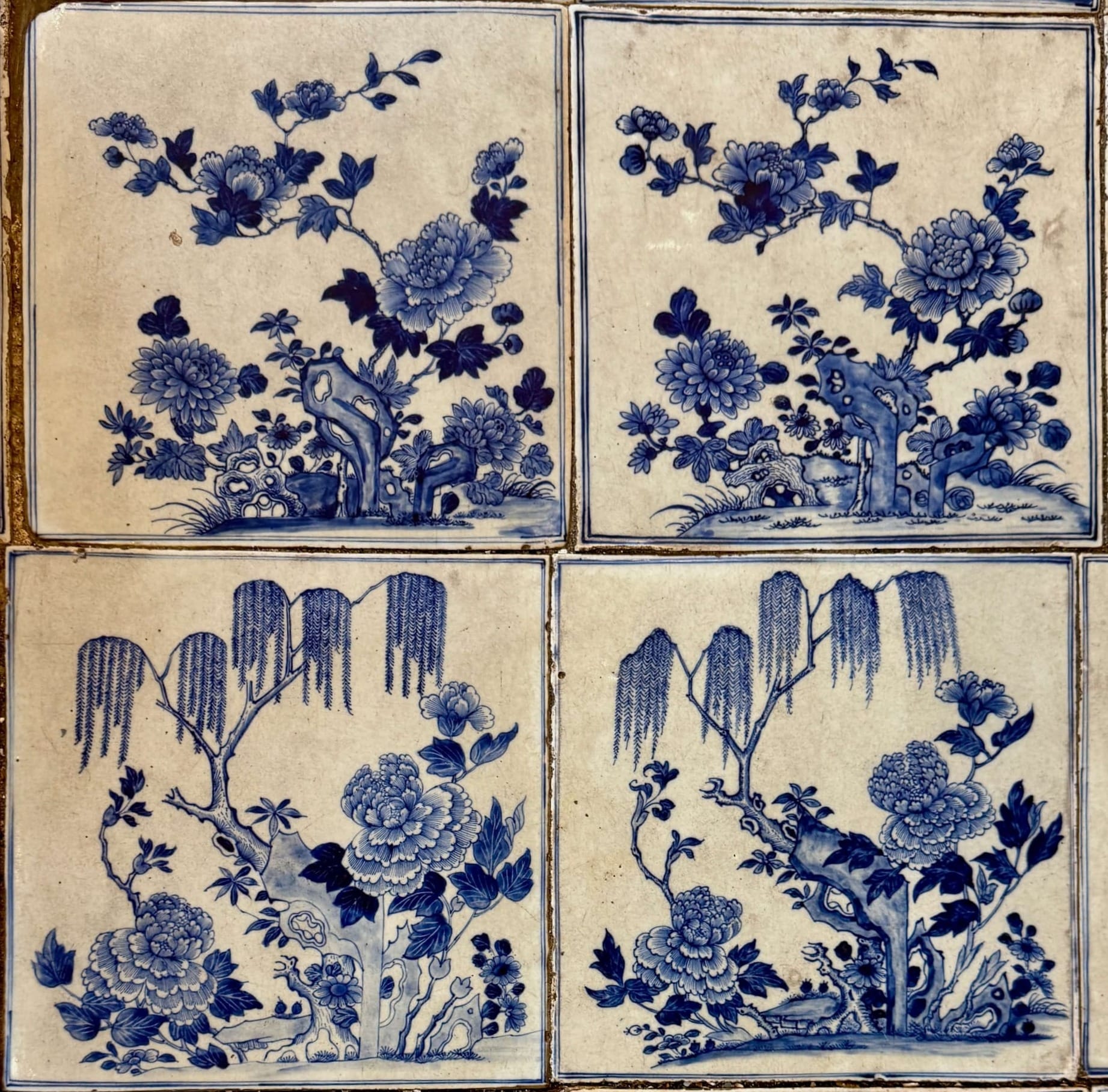
The floor is covered with hundreds of 18th-century Chinese porcelain tiles, hand-painted in blue and white. Each tile has a different pattern. They were brought from Canton by Ezekiel Rahabi, a Jewish businessman, around 1762.
Belgian glass chandeliers hang from the ceiling, dating to the 19th and early 20th centuries. A brass-railed pulpit stands in the centre. A carved teak ark houses four Torah scrolls, enclosed in silver and gold. Two gold crowns, gifts from the Kings of Kochi and Travancore, are kept inside.
And then there's the clock tower. Built in 1761, it stands 45 feet tall. Each of its four faces shows the time in a different script: Arabic, Hebrew, Roman, and Malayalam.
On the outer wall, you'll find a stone tablet from the Kochangadi Synagogue, which was built in 1344 and later destroyed. The inscription, in Hebrew calendar dating, calls the structure "an abode for the spirit of God."
The Paradesi Synagogue had a caste system of its own. Three groups worshipped here, but not equally.
The "White Jews" were the Paradesi Jews themselves. Descendants of Sephardic families from Spain, Portugal, and the Netherlands. They were full members.
The "Black Jews," or Malabari Jews, were the original Jewish settlers of Cochin - families who had been here for centuries before the Paradesi arrived. They could worship in the synagogue but were not admitted to full membership.
The Meshuchrarim were freed slaves and their descendants, brought to India by the Sephardic families. They had no communal rights. They sat on the floor, or on the steps outside.
In the early 20th century, a man named Abraham Barak Salem, himself a meshuchrar, fought this discrimination. He campaigned publicly, and eventually the rules changed. If you're walking through Mattancherry today, Salem's story might be the most important one you hear. A.B Salem Road near Jew Street is dedicated to his story and memory.
At its peak around 1948, the Cochin Jewish community numbered about 2,400. They had never faced antisemitism in India, except during the Portuguese conquest centuries earlier. They lived alongside Hindus, Christians, and Muslims for generations.
But when Israel was established in 1948, the pull was strong. By 1954, most Cochin Jews had emigrated. The Malabari Jews went mostly to Israel. The Paradesi Jews scattered to Australia and other Commonwealth countries.
Today, about 15,000 descendants of Cochin Jews live in Israel. In Kerala, only about 14 Malabari Jews and one Paradesi Jew remain. (As of 2025)
The synagogue still functions. Prayers are held when a minyan - the quorum of ten men needed for a Jewish service - can be gathered. But those ten usually include visiting tourists. The community that actually built this place is, for practical purposes, gone.
The synagogue is at the end of Synagogue Lane in Jew Town, Mattancherry. You'll walk through a narrow street lined with antique shops, art galleries and cafes to get there.
There's a small entry fee per person. Please carry cash.
Shoulders and knees must be covered. Men should wear full shirts and trousers. Women should wear skirts or clothes that cover below the knee. And remember: shoes off at the door.
From Fort Kochi, take an auto-rickshaw to Jew Town (about 15 minutes, Rs 50-80). You can also take the Water Metro to Mattancherry Water Metro Station and walk. If you're already visiting the Mattancherry Palace, the synagogue is a short walk from there.
The Paradesi Synagogue is not a museum. It is still a place of worship. But the community that built it, prayed in it, fought over it, and reformed it has almost entirely moved on. What remains is a building that holds objects from China, Belgium, Ethiopia, Spain, Portugal, and Kerala all in one room. A clock tower that tells time in four scripts. Copper plates that recorded a Hindu king's friendship with a Jewish merchant a thousand years ago.
And one shared wall with a Hindu temple, in a town where everyone takes their shoes off at the door.
That is My Beloved Fort Kochi. Meow.

Three colonial powers. One wooden church turned stone. And a tombstone that tells 500 years of Fort Kochi's story.

Planning your Fort Kochi visit? Scroll to your date for a ready-made itinerary — morning cafes, heritage walks, afternoon rest spots, sunset times, and night plans.

Built by the Portuguese. Wrecked by the British. Painted by a dying Italian. Santa Cruz Basilica has stories most visitors miss.


...I couldn’t help but feel a flicker of gratitude in my fur. It's so much easier in the cat world. We don’t really care for labels. Gender isn't that popular a concept, as are most boxes that aren't cardboard.

Join 1500+ others & Sign up for the newsletter and get our latest posts delivered straight to your inbox.