


Synagogue · Mattancherry
Paradesi Synagogue
Hundreds of hand-painted blue-and-white Chinese tiles, no two alike.
The Paradesi Synagogue stands on Synagogue Lane in Mattancherry’s Jew Town, beside the Mattancherry Palace. The synagogue and the palace temple share a common wall. It is open from 10am to 6pm on Monday to Thursday and on Sunday. On Friday it opens from 10am to 2pm. It is shut on Saturdays.
Inside, the floor is paved with hundreds of 18th-century hand-painted Chinese porcelain tiles, and each tile differs from the next. Ezekiel Rahabi brought them from Canton. The teak Ark holds four Torah scrolls.
The synagogue was built in 1568. The Portuguese destroyed it in 1662, and the Dutch rebuilt it two years later. The World Monuments Fund restored the clock tower and other parts of the complex between 1998 and 1999. The copper plates kept here, dated to the 10th century, record privileges granted to Joseph Rabban, the earliest known Cochin Jew.
Visitors enter barefoot, so wear shoes that slip off easily at the door.
Did you know
Paradesi means foreigner in Malayalam.
The synagogue floor is laid with hundreds of 18th-century Chinese porcelain tiles, hand-painted in blue and white. No two are the same.
Around 1000 CE a Hindu ruler granted a Jewish leader, Joseph Rabban, his own privileges — inscribed on copper plates. The plates are still kept inside the synagogue.
The synagogue and the Hindu temple of Mattancherry Palace share a wall.
The synagogue’s Belgian glass chandeliers were imported in the 19th century.
During the Portuguese plunder of Mattancherry’s Jew’s Town in 1662, the Jewish community hid its ancient Hebrew Pentateuch, or Torah scroll, to save it from destruction. After Dutch rule was established, they recovered it completely uninjured in 1668.
Visitors are expected to enter the Paradesi Synagogue barefoot.
The synagogue and the Mattancherry Palace temple share a common wall.
The copper plates kept at the synagogue, dated to the 10th century, record privileges granted to Joseph Rabban, the earliest known Cochin Jew.
The Portuguese destroyed the synagogue in 1662, and the Dutch rebuilt it two years later.
Ezekiel Rahabi brought the Chinese tiles from Canton in the 18th century.
The synagogue floor is paved with hundreds of 18th-century hand-painted Chinese porcelain tiles, and each tile is unique.
The Paradesi Synagogue was built in 1568.
The Paradesi Synagogue: 450 Years of Spice, Prayer, and Hand-Painted Tiles in Mattancherry
The oldest active synagogue in the Commonwealth, in Mattancherry, Kochi: Chinese tiles, copper plates from 1000 CE and a clock with four scripts.
Guides
5- Heritage & History in Fort Kochi

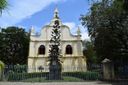
- Inside Anand Warehouse, Your Guide to the Kochi-Muziris Biennale’s Most Intense Venue
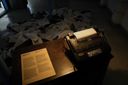


Readings
3

Events
4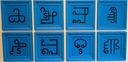
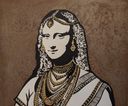
- When Children Make the Art: Olimalar Foundation’s Exhibition & Workshop in Kochi [Apr 8]Ended · 8 Apr 2026


Write to Paradesi Synagogue
Ask about opening times, tickets or anything else. Your message goes to them by email, and they reply to you directly.
Sent. Their reply will come to your email.Join our WhatsApp Channel
That did not reach us properly. Please fill in the form again.
Please add your name, on one line and up to 100 characters.
That email address did not work. Check it and try again.
Please write your message, up to 2,000 characters.
This place is not taking messages through Cats of Kochi right now.
It did not send, and nothing is wrong with what you wrote. Please try again later.
Drawn from OpenStreetMap, by its contributors.
Is this page useful?
Thank you for your feedback.
That did not send. Please try again in a moment.