
The Marathon Mail Runners of Fort Kochi Post Office
The Anchal Post Runners ran with postal bags balanced on their heads and carried a two-foot staff with bells attached. When people heard the bells coming down the road, they made way.
The Anchal Post Runners ran with postal bags balanced on their heads and carried a two-foot staff with bells attached. When people heard the bells coming down the road, they made way.


Plan your Fort Kochi visit with day-by-day itineraries for April & May 2026. Morning cafes, heritage walks, sunset times & night plans all in one place.
Iced coffee in a former godown on a 600-year-old spice street. Coz Layover Cafe, Mattancherry in Fort Kochi
The British arrived and took over toward the end of the 18th century. In 1806, they destroyed the remaining fort walls - but left the bungalow standing. Typical British move: flatten the fort, keep the pretty house.


I rushed into the office, paws skidding on the polished floor, tail high like a flag of feline importance.
Bandit - jet-black fur, sharp yellow eyes, Editor-in-Mischief of Cats of Kochi - didn't even flinch. He was hunched over his desk, surrounded by museum pamphlets and empty tea cups arranged like modern art.
"Finally," he said, not looking up. "Your report on Bastion Bungalow. The readers want details. Scandals. Secret tunnels. Tell me everything."
I opened my mouth. Closed it. Opened it again.
"There was this cat-"
"The Bungalow first, Ginger. You know the rules. Historical facts, then romantic distractions."
He had a point. So I took a breath and launched into it.
"Right. Bastion Bungalow," I said, settling onto the windowsill. Rain splattered behind me like a backdrop from a period film.
"It sits right on the remains of the old Stromberg Bastion. Back when Fort Kochi was a merry-go-round of colonial powers playing territorial tug-of-war."
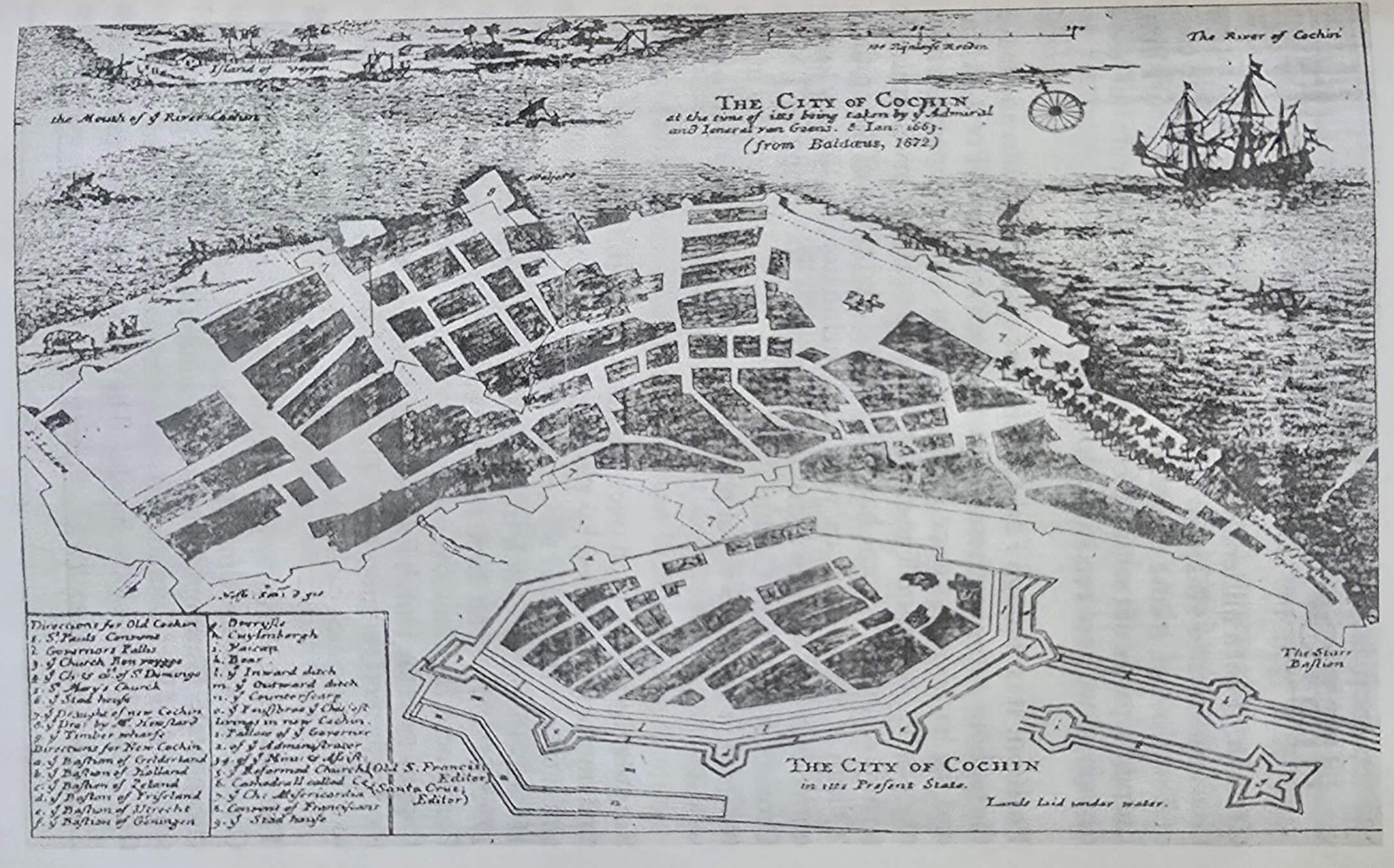
The story starts in 1503. The Portuguese built Fort Immanuel right here - the first European fort in all of Asia. Seven bastions. Watch towers. Ramparts. The whole military package.
Then came the Dutch in 1663. They captured Kochi and, in true conqueror fashion, knocked most of the fort down. Reduced it to a third of its size.
But they kept the Stromberg Bastion. And by 1667, they'd built a bungalow right on top of it - wrapping the new structure around the old circular fort walls. That's the building you see today.
"The place is pure Indo-European architecture," I told Bandit, flexing my claws for emphasis. "Big open verandahs. Geometric-tiled roof. High ceilings. Wooden first-floor balconies along the front. They used brick, laterite, and wood - it's all very rustic, very 'look how important I am' colonial charm."
And then the British arrived. They took over toward the end of the 18th century. Colonel Macaulay himself lived here in the early 1800s. In 1806, the British destroyed the remaining fort walls - but left the bungalow standing.
Typical British move: flatten the fort, keep the pretty house.
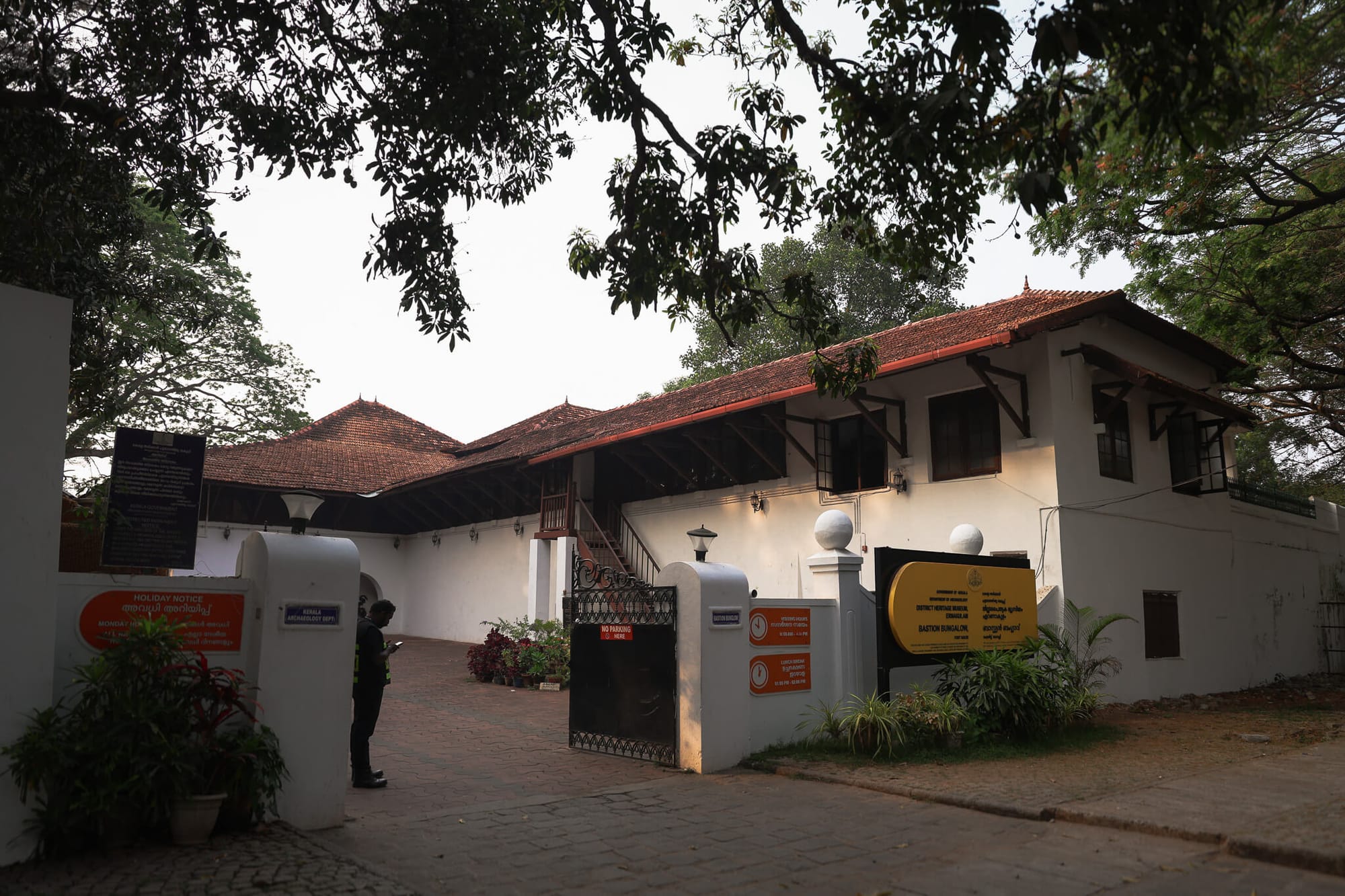
In 2016, the Kerala government turned it into the District Heritage Museum. And honestly? It's one of the most quietly impressive museums in Fort Kochi.
The exhibits walk you through Kochi's entire trade history - from ancient sea routes and the Muziris Papyrus to Portuguese, Dutch, and British colonial periods. There are old maps, rare documents, paintings, and artifacts from the different communities that made Kochi what it is.
And old cannons preserved from the colonial era, standing guard in the grounds.
Inside, they've set up an old Dutch kitchen with original-style utensils. A big Dutch oven - heavy, probably cast iron, built for slow-cooking roasts and stews. Metal pots in copper and brass. Long-handled ladles and serving dishes that look half-Dutch, half-Kerala.
It's one of those small details that tells a big story. European cooking methods meeting Kerala spices and tropical weather. Imagine trying to bake bread in this humidity. Those kitchens were little culture-mixing zones - probably the origin of every fusion food argument humans have today.
Bandit's ears perked. "Secret tunnels?"
"Legends say so," I admitted. "The Portuguese were known for building underground tunnel networks beneath their forts - escape routes in case of enemy attacks. Some sources mention a tunnel in the basement. But a full network? Not found yet."
"Maybe under the garden," Bandit said. "Or behind a bookshelf."
"Humans do love their secrets."
Bandit jotted down the last notes, satisfied.
"Right," I said, grinning. "Now can I tell you about her?"
"Here we go." Bandit sighed, settling in like he knew resistance was futile.
"She was at the entrance. Amber eyes like molten gold. Sleek grey fur with a silvery shimmer. And the way she spoke - like every word held a hundred years of secrets."
Her name was Zara. She said she'd been watching over the bungalow for years. Knew every brick, every whisper of history. She walked me through the place, weaving stories like silk. She showed me the garden with its stone sculptures - none compared to her, of course.
And right at the end, she gave me this look and said: "If you're really into Indo-Portuguese history, the real treasures are at the Indo-Portuguese Museum nearby."
"You went there?" Bandit asked.
I blinked. "No. Obviously not. I rushed here to tell you about Zara."
Bandit stared. Tail flicking with quiet disbelief. "You've got the attention span of a kitten at a laser pointer convention."
"Rude, but accurate."
He hopped down from the desk. "Come on, Romeo. We're going to the Indo-Portuguese Museum - together. Someone needs to keep you from wandering off."
"Deal. Maybe Zara will be there too..."
"Focus, Ginger. History first. Scandalous romances later. You dont want to give Lady Whiskersdown more content that she already has on you"
And with that, we slipped into the Fort Kochi streets, tails high, paws ready - for history, mystery, and maybe a little more sparkle-eyed magic.
Related: If you're exploring Fort Kochi's colonial heritage, don't miss the Paradesi Synagogue through Alleppey's eyes and check our 32 things to do in Fort Kochi for more.
Bastion Bungalow is also one of the main venues for performances and workshops during the Kochi-Muziris Biennale. Check the link for the latest events.
Visit: Napier Street, Karuvelippady, Fort Kochi, Kerala 682001 Timings: 10 AM - 1 PM and 2 PM - 5 PM (Closed Mondays) . On Google Maps
Nearby Attractions: Francis Church, Chinese Fishing Nets

The Anchal Post Runners ran with postal bags balanced on their heads and carried a two-foot staff with bells attached. When people heard the bells coming down the road, they made way.

Plan your Fort Kochi visit with day-by-day itineraries for April & May 2026. Morning cafes, heritage walks, sunset times & night plans all in one place.

Iced coffee in a former godown on a 600-year-old spice street. Coz Layover Cafe, Mattancherry in Fort Kochi

Rainforests, incense sculptures, insect paintings - all read through a 2,000-year-old Tamil system of landscape and emotion.
Join 1500+ others & Sign up for the newsletter and get our latest posts delivered straight to your inbox.