


In his last 18 months alive, Mahatma Gandhi walked nearly 10,000 miles. He moved across Bihar, Calcutta, Bengal, Delhi and Punjab. He walked 110 of those miles barefoot, on mud tracks between villages that had just witnessed mass killings.
He was 77. He was trying to stop a country from tearing itself apart.
On January 30, 1948, he was shot dead.
Now, inside a warehouse on Bazaar Road in Mattancherry, four Artists from Kerala have brought those final footsteps back to life. And around their work, 10 more Kerala artists are showing pieces that speak to similar wounds - of caste, exile, illness, displacement, and the quiet violence of forgetting.
Simi Warehouse is one of the smaller venues at the Kochi-Muziris Biennale 2025, tucked along the busy Bazaar Road stretch in Mattancherry. But what it holds inside is among the most powerful art you will see this season.
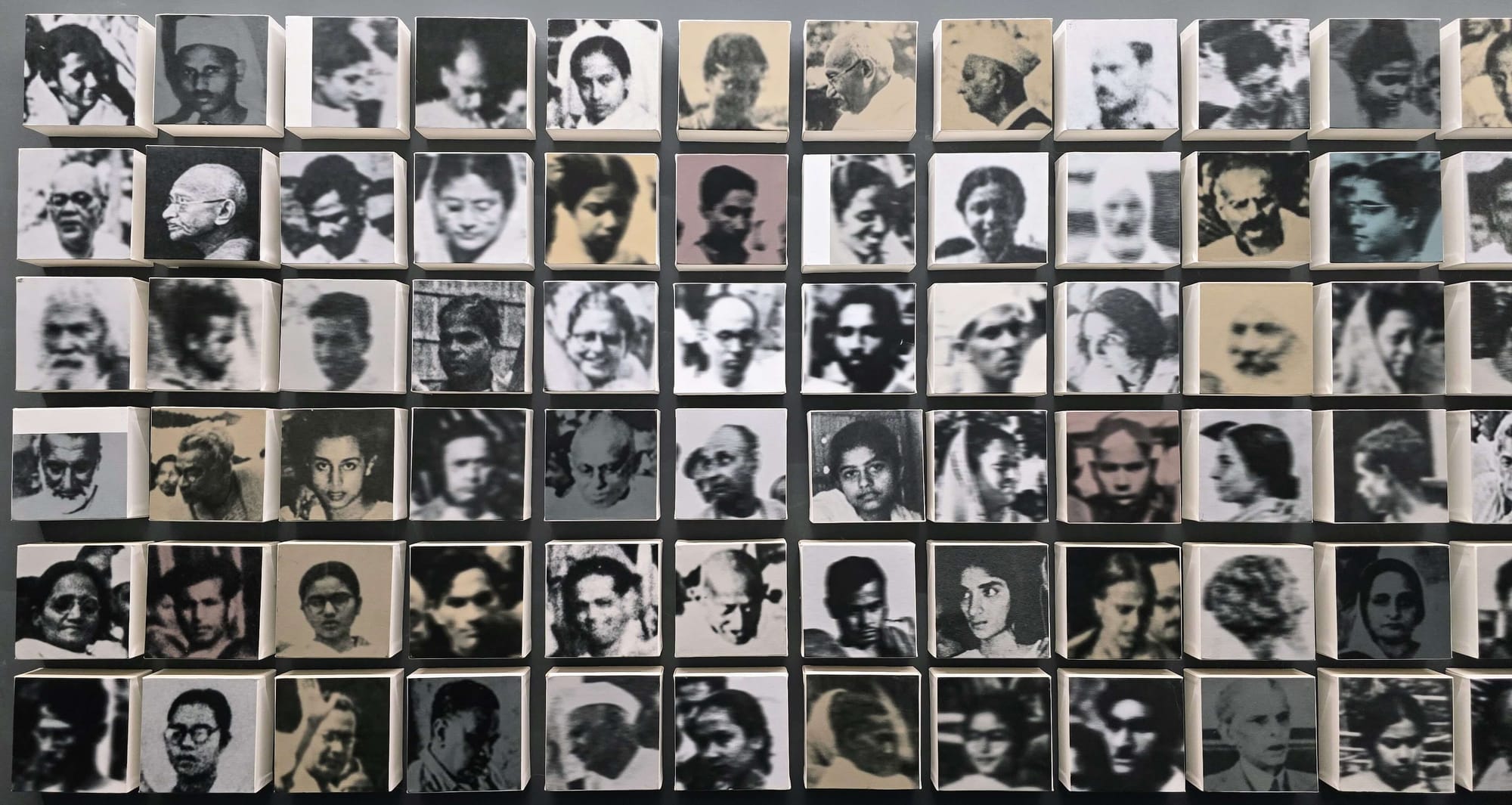
'You I Could Not Save, Walk With Me' - The Gandhi Exhibition
The exhibition was created by a team of four: artist Murali Cheeroth (who is also the Chairperson of the Kerala Lalithakala Akademi), human geographer and urbanist Dr. Jayaraj Sundaresan, poet and cultural activist PN Gopikrishnan, and photographer Sudeesh Yezhuvath.
In 2024, the group travelled together to the actual places where Gandhi spent his final months - Noakhali (now in Bangladesh), Bihar, Kolkata, and Delhi. They visited riot-affected locations, photographed what remains of those sites, and spoke with people who were children when Gandhi walked through their villages.
The result is a multimedia exhibition of photographs, poems, videos, installations, letters, and archival material. Gandhi is not presented here as a statue or a symbol on currency notes. He appears as a vulnerable, stubborn human being who chose to walk into danger zones at 77 because nobody else would.
One striking detail from the research: the school ground in Paniala, Noakhali, where "Raghupati Raghav Rajaram" was first sung publicly. Another: the temporary mound-shaped grave of Reddypalli Satyanarayana (Thakur Bhai), who stayed behind after Gandhi left to continue the peace work - and insisted that nothing be erected over his grave when he died.
The exhibition also includes footage of the trial of those involved in Gandhi's assassination and the justifications given by the assassin. It does not look away.
PN Gopikrishnan, whose poems are displayed on the walls, puts it bluntly: Gandhi took on the responsibility of stopping communal violence almost alone. The exhibition opened at Durbar Hall Art Centre on January 30 at 5:17 PM - the exact time and date of Gandhi's assassination.
The Kerala Artists: 10 Voices, Many Worlds
Beyond the Gandhi exhibition, Simi Warehouse holds work by 10 artists from Kerala and its diaspora. Each brings a very different practice, but together they create a conversation about memory, identity, pain, and how art can hold what words cannot.
Here is who you will find inside:
Tom Vattakuzhy - The Story Painter
Tom Vattakuzhy may be the most talked-about artist at this Biennale - and not just for his paintings. Born in Muvattupuzha in 1967, he trained at Santiniketan under K.G. Subramanyan and Somnath Hore, and later at the Faculty of Fine Arts in Baroda.
He is best known for his figurative paintings that feel suspended between reality and dream. Light plays a central role - soft, diffused, sometimes sharp and theatrical. His recent work, which he calls "story paintings," sits between illustration, memory, and fine art. He was inspired by Indian masters like Nandalal Bose and Binod Bihari Mukherjee who believed art should reach everyday life, not stay locked in galleries.
His history painting "Death of Gandhi" appeared on the cover of the 2020 Kerala State Budget - a deliberate political statement.
At this Biennale, his work drew fresh controversy when Catholic groups objected to another painting, "Supper at a Nunnery," leading to a temporary halt of an exhibition. Vattakuzhy maintains the work is a literary interpretation, not an attack on faith.
Abin Sreedhar - Archives of the Marginalised
Abin Sreedhar works across drawing, sculpture, photography, painting, and text. His central concern: how violence, labour, and resistance shape identity - particularly the histories of slavery and caste that mainstream Indian art often ignores.
He holds a BFA from the College of Fine Arts in Thiruvananthapuram and an MVA in Sculpture from the University of Hyderabad. He currently practises in Baroda. In 2023, he was a resident at Gasworks in London, one of the most respected international residency programmes. He is also participating in the 36th Sao Paulo Biennale - a significant international recognition.
His paintings look like artefacts from a museum that does not yet exist. Found objects and archival images become figurative or animalistic structures influenced by scientific instruments. He is building a visual language for experiences that history tried to erase.
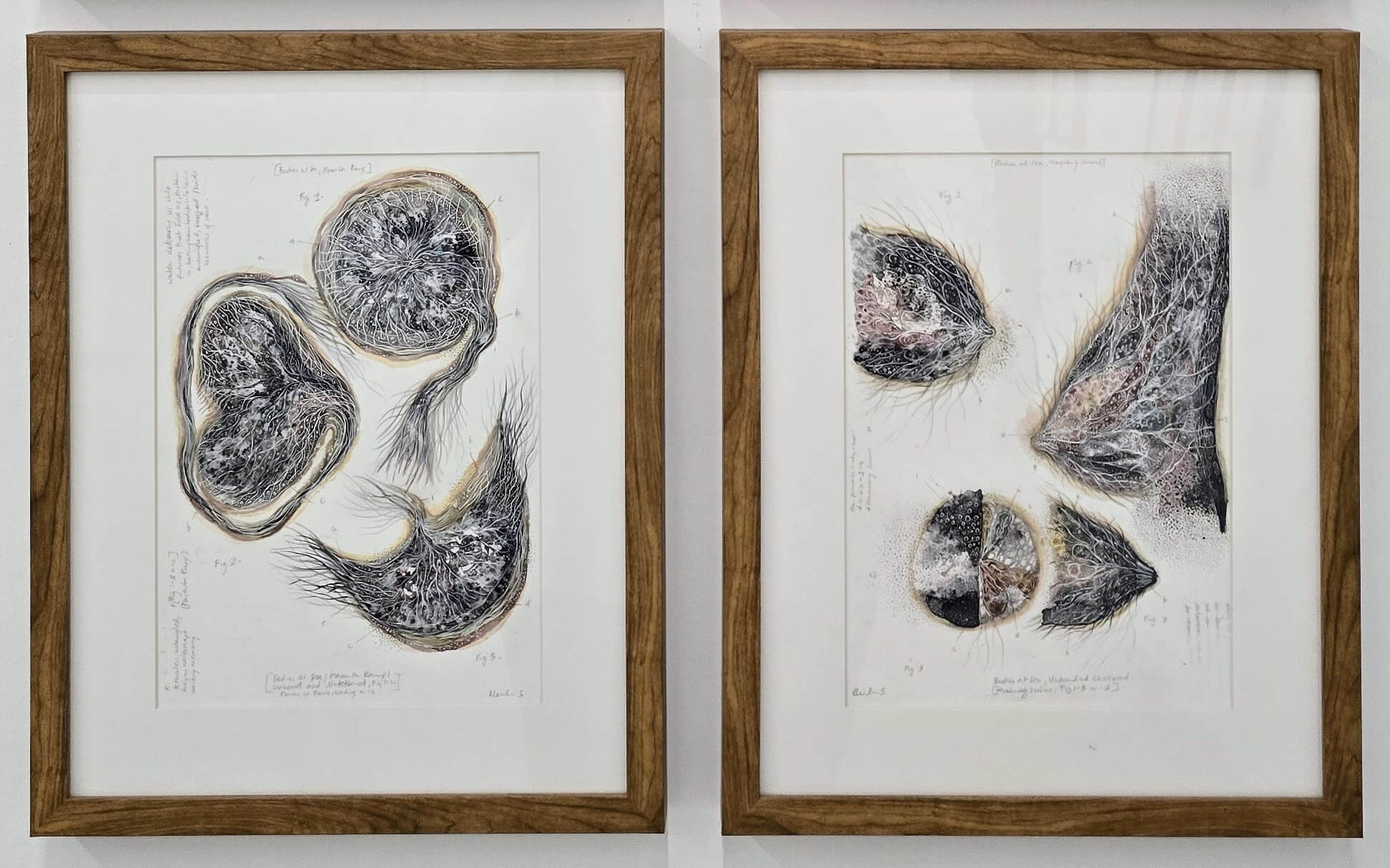
Devika Sundar - Mapping the Body
Devika Sundar's art comes from a deeply personal place. Between 2009 and 2018, she spent years in hospital clinics, X-ray rooms, and MRI facilities dealing with unexplained chronic pain and weakness. These symptoms were eventually diagnosed as fibromyalgia.
That experience of being tested, scanned, and mapped by machines became the starting point of her practice. She traces how biomedical systems chart the human body, but also looks at how Ayurveda, pranic healing, and other eastern traditions read it differently.
Water recurs in her imagery. She finds that her body feels lightest and most free in water - where pain softens and she feels briefly at home.
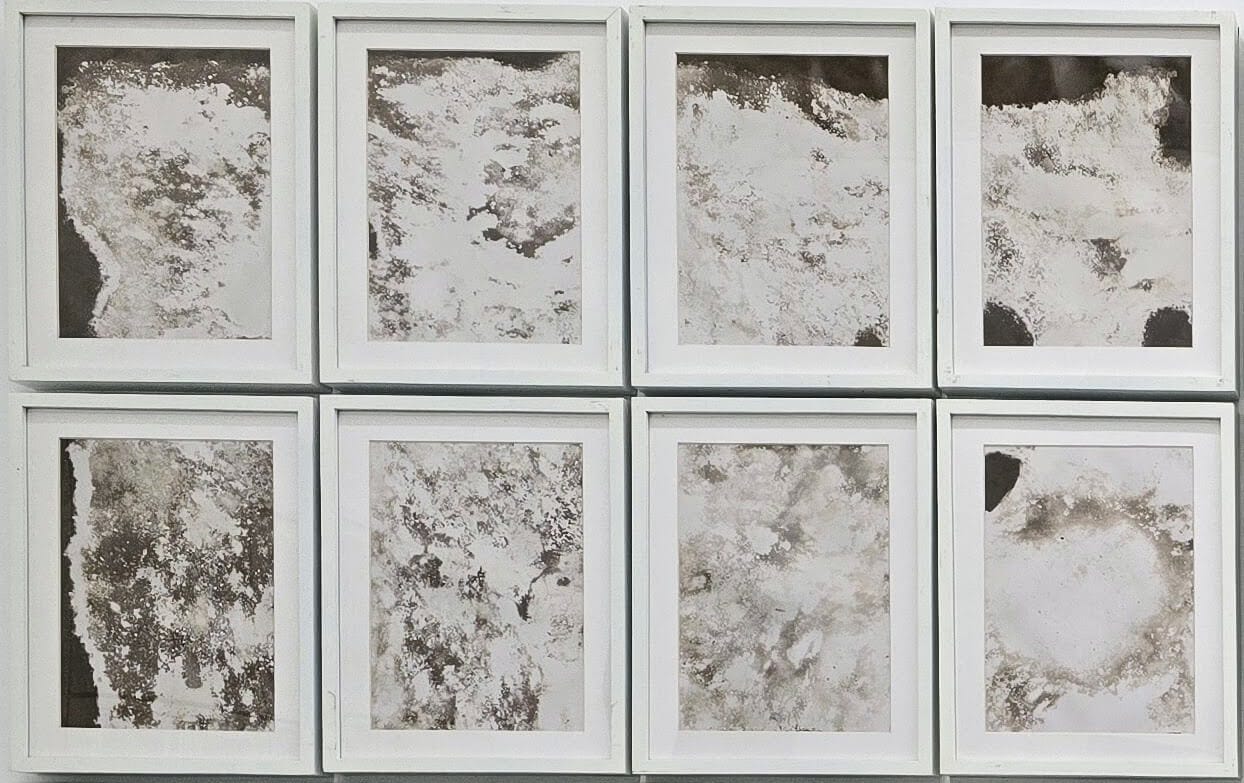
Anu John David - Kerala's Chinese Connection
If you have seen the famous Chinese fishing nets at Fort Kochi, Anu John David's work will add a new layer to what you know. From Quilon (Kollam), he explores the deep but often forgotten historical connections between Kerala and China - a relationship that dates back to 800 AD, well before the Portuguese arrived.
Chinese and Malayali cultures influenced each other in cuisine, martial arts, and language. David collects sand from ancient Chinese settlement sites - Sambranikodi, Sasthamkotta Lake, and Thangassery - and layers it onto photosensitive paper. He then exposes the paper to monsoon rains, producing abstract, non-representational images.
The result is art that literally carries the soil of a shared past, transformed by the weather of the present.
Josh PS - Weeds: The Unwanted People
Josh PS has been making art for over three decades, and his work at Simi Warehouse carries the weight of all that time. His series "Weeds" uses the metaphor of unwanted plants for the unwanted people of our world - the displaced, the separated, the hungry, those surviving wars that most of the world ignores.
He writes of feeling a deep responsibility toward collective pain - the experience of exile, alienation, rejection, and displacement. His aim is direct: to transform pain into reflection and to affirm compassion as the beginning of healing.
Vishak Menon - Where Code Meets Canvas
Vishak Menon's abstract drawings look like something a meditation app and a broken screen might produce together - and that is the point. His work is rooted in repetitive mark-making that he treats as an act of meditation. But conceptually, he is interested in glitches, errors, and algorithmic noise.
His Interference series uses repeated lines to create optical and spatial shifts that recall digital screen environments. He merges colour field painting traditions with digital sensibilities, asking: how does our interaction with machines change how we see?
Umesh PK - Painting as a Verb
Umesh PK paints the natural world, but never tries to preserve a fixed image. He starts with something specific, then lets the work dissolve and transform through the process. Thick layers of pigment accumulate on canvas, creating a dynamic tension between what you can recognise and what slips into abstraction.
The wall text invites viewers to think of his paintings not as finished objects but as active processes - painting as a verb rather than a noun.
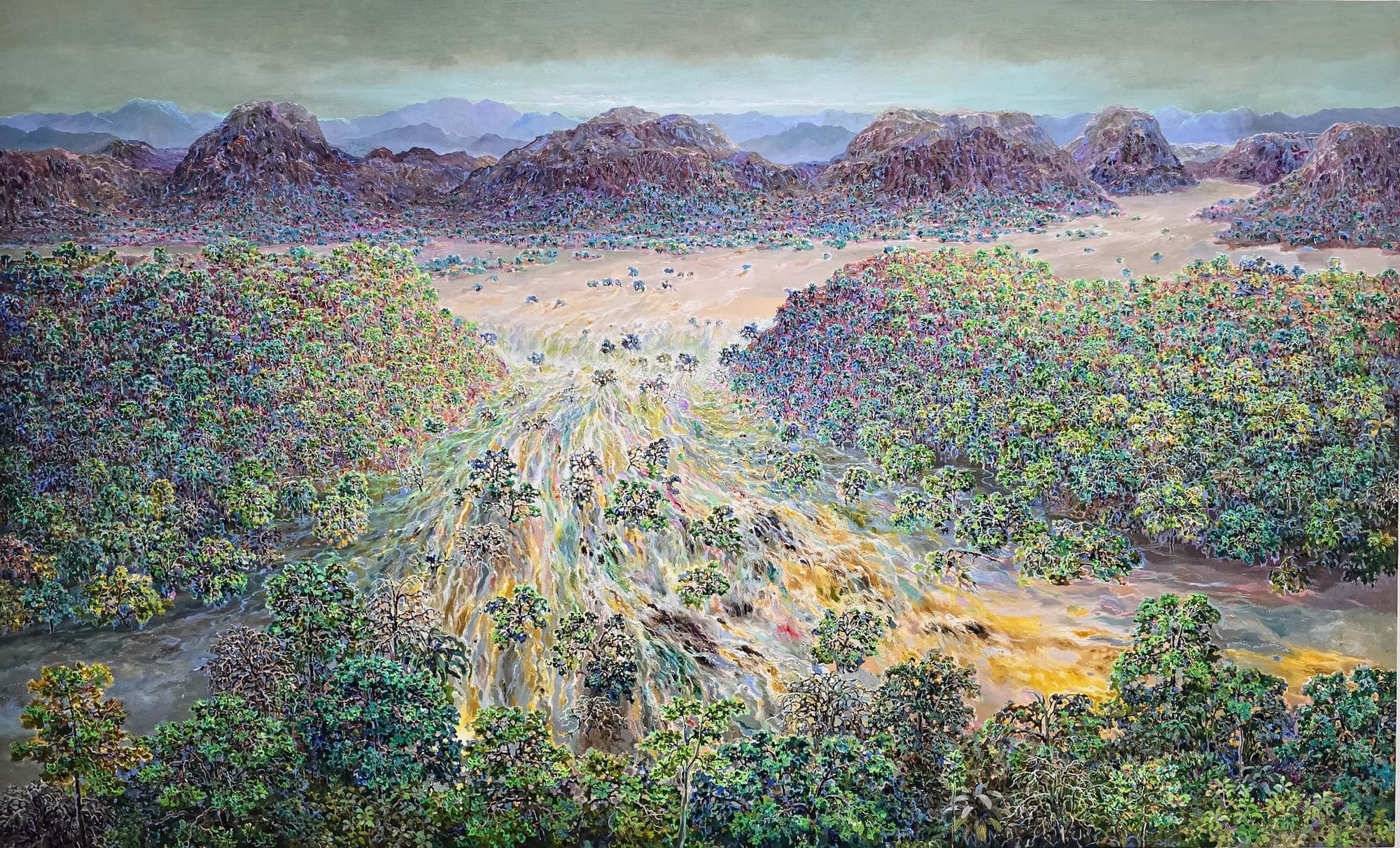
Mehja VS - Landscapes of Memory
Mehja VS begins with ordinary landscapes that most people walk past without noticing. But in her hands, nature becomes memory and memory becomes a landscape. She is interested in the emotional and sensory connections between people, places, and the past - the shared terrain where the natural world and our human experience of it overlap.
Sebastian Varghese - Drawing Against Mortality
Sebastian Varghese works with pen and ink - the same materials he has used since his early days of spontaneous, unplanned image-making. His small-format drawings accumulate layered line patterns, each improvised in the moment. A recent period of health challenges gave his work a new urgency, turning drawing into a way of confronting existential concerns. He completed his BFA from the College of Fine Arts, Trivandrum, in 1994 and was part of the outreach staff for the very first Kochi-Muziris Biennale in 2012. He currently divides his time between Kochi and the United States.
Ramu Aravindan - The Slow Photographer
Ramu Aravindan is a photographer and graphic designer based in Bangalore. His work explores the relationship between landscapes, spaces, objects, and the connections they create. He describes his practice as rooted in spending deliberate, unhurried time with places - experiencing them physically and optically until the space itself seems to look back.
He holds a Master's in Graphic Design from the National Institute of Design (NID), Ahmedabad, and a Master's in Photography from the University of Calgary. He teaches at NID and Azim Premji University. His book projects include "Handmade in India" (Mapin Publishing/NID) and "Cities of Kerala" (Marg Publications).
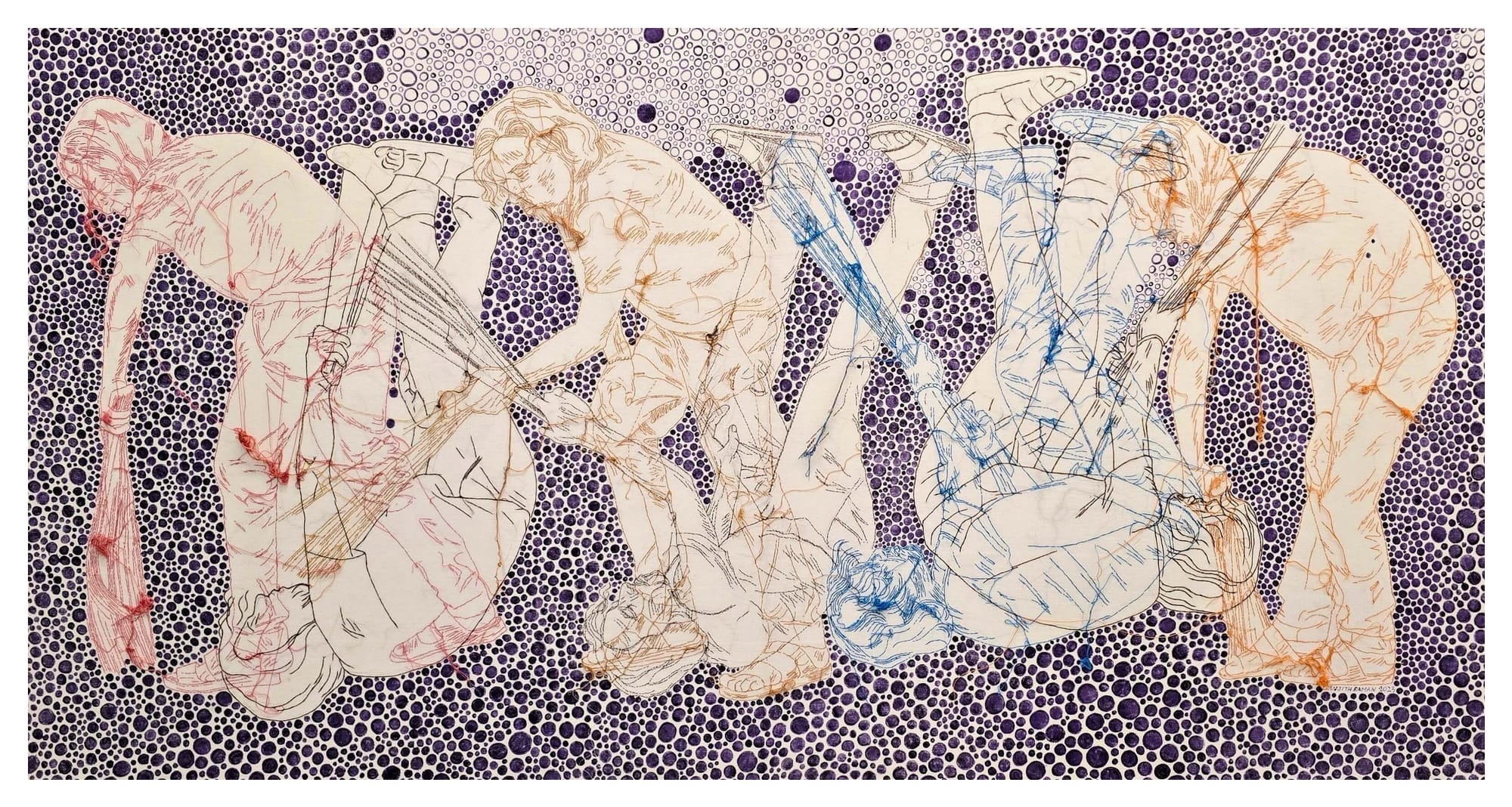
Ranjith Raman - Stitching the Inner and Outer World
For Ranjith Raman, making art is like prayer. Each stitch becomes a quiet chant. He works with textiles, using the repetitive process to turn inward and bring to the surface what he carries within. His art explores the duality in every person - the inner and outer self - and seeks to merge them into something whole.
Related Reads: If you are exploring the Biennale venues in Mattancherry, check out our guide to the complete KMB 2025 schedule and our insider guide to Fort Kochi and Mattancherry.
Visiting Simi Warehouse
Where: Bazaar Road, Mattancherry, Kochi. Simi Warehouse is along the main stretch, close to other Biennale venues like Anand Warehouse, SMS Hall, and Armaan Collective.
When: Open during Biennale hours, 10 AM to 6 PM on all days. The exhibitions run until March 31, 2026.
Entry: Free
How to get there: From Fort Kochi, you can walk along Bazaar Road (about 15-20 minutes from the Chinese fishing nets) or take the Water Metro to Mattancherry and walk from there. Auto-rickshaws from Fort Kochi cost about Rs 50-80.
Combine with: Cube Art Spaces (Vivan Sundaram's posthumous exhibition, also on Bazaar Road), the Paradesi Synagogue and Jew Town antique shops, and lunch at one of the Mattancherry eateries.


